Crypto markets move quickly, and professional traders need instruments that can keep up with shifting liquidity, volatility, and directional views. That is why perpetual contracts have become one of the most widely used derivatives formats in digital assets.
Unlike dated futures, perpetual contracts have no expiry date. For professional users, perpetual contracts for crypto traders are not just speculative products; they are tools for managing exposure, hedging risk, and reacting quickly to market direction.
Why Professionals Use Perpetual Contracts
In professional crypto trading, the appeal of perpetual futures strategy comes from flexibility: traders can go long, go short, hedge exposure, or use crypto derivatives tools such as grid bots and copy trading.
Perpetuals also make short exposure more direct. Spot traders can only sell what they already own, while perpetual contracts allow traders to express bearish views or hedge existing holdings without borrowing the underlying asset.
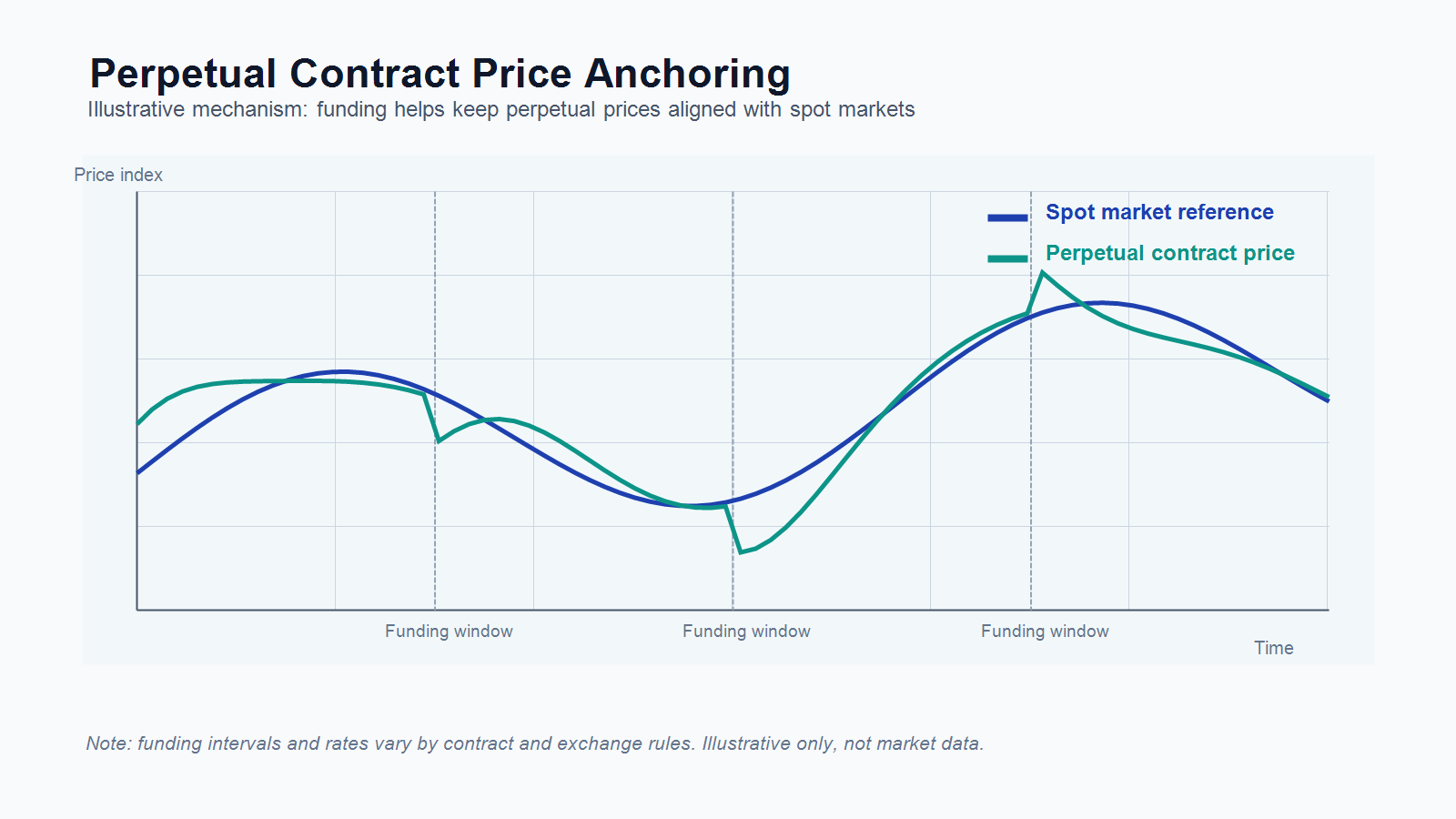
Funding rates help keep perpetual contract prices aligned with spot markets. On many contracts, funding is settled every eight hours, although the exact interval can vary by trading pair and exchange rules.
Leverage is another reason perpetuals are popular, but it is also where risk rises quickly. BYDFi supports leverage settings from 1x to 200x on eligible perpetual contracts, but higher leverage also increases liquidation risk. Professional traders typically treat leverage as a risk-management variable rather than a default setting.
What Traders Should Evaluate in a Platform
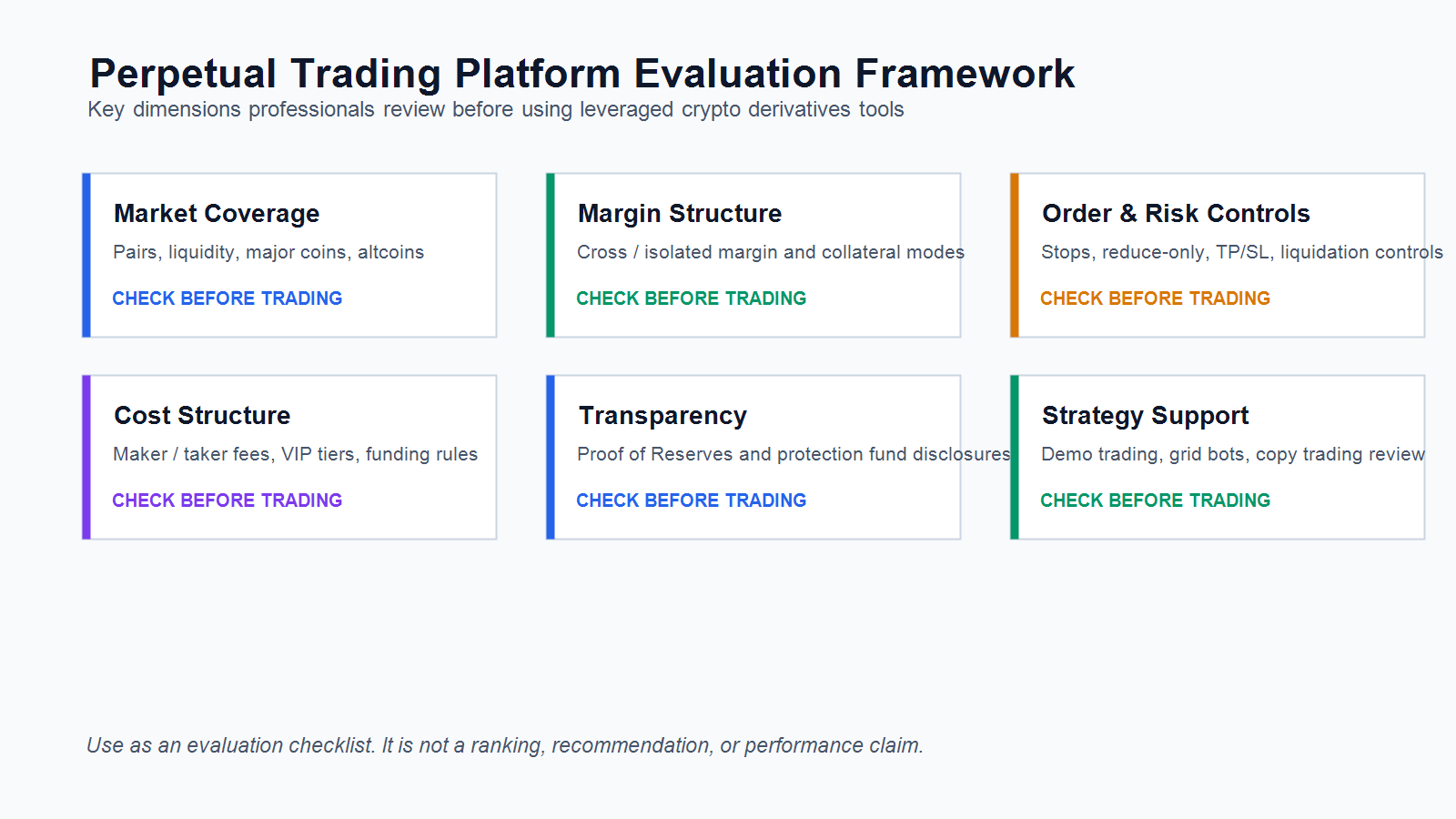
A perpetuals platform is not just a price chart and a leverage slider. Professionals usually evaluate margin modes, settlement assets, order types, risk controls, fees, transparency disclosures, and the depth of available trading pairs.
Cross margin can improve capital efficiency by sharing collateral across positions, while isolated margin lets traders cap risk on a specific position. Settlement options also matter: USDT-M, USDC-M, and COIN-M contracts can each fit different accounting, collateral, and portfolio preferences.
Order controls are equally important. Limit, market, stop-limit, stop-market, take-profit/stop-loss, reduce-only, and GTC orders give active traders more ways to define entries, exits, and liquidation-risk boundaries.
Fees compound for high-frequency and high-volume traders. BYDFi's base perpetual contract fees are 0.02% maker and 0.06% taker at VIP 0, with lower rates available for higher VIP tiers.
BYDFi's Perpetual Contracts Toolkit
BYDFi, founded in 2020, offers perpetual contracts across 500+ trading pairs and supports USDT-M, USDC-M, and COIN-M settlement modes. Its partnership with Newcastle United as the club's Official Crypto Exchange Partner is part of BYDFi's public brand activity, adding visibility to the platform's global profile and international market presence.
The platform also supports bi-directional long/short hedging on the same pair, shared funds in full-margin mode, and position-management upgrades designed for traders using hedging and multi-position strategies.
BYDFi's Smart Copy feature, launched in August 2025, allows users to follow multiple traders with separate sub-accounts and proportional order sizing. This can be useful for users who want exposure to experienced traders' strategies, while still requiring careful review of risk, performance history, and position sizing.
For automation, Futures Grid bots can help traders test range-bound strategies in sideways markets. The demo environment lets users test perpetual strategies before committing real capital.
BYDFi also offers a lower-friction onboarding path: users can register with an email and access trading without mandatory identity verification in many cases. However, withdrawal limits, regional availability, and risk-control reviews may apply, and users should check current platform rules before trading.
BYDFi publishes Proof of Reserves data, including reserve ratios for BTC, ETH and USDT, and lists an 800 BTC Protection Fund on its official transparency page. These disclosures give users additional information when evaluating platform transparency and reserve coverage.
Risks and Trade-Offs
Perpetual contracts are useful, but they are not simple. Funding payments can reduce returns during crowded or strongly trending markets, especially when positions remain open for long periods.
Liquidation risk is the most visible danger. Higher leverage means a smaller adverse price move can close a position, so traders need clear rules for collateral, stop-loss placement, and position sizing.
Complexity is another risk. Margin mode, funding interval, collateral type, order settings, copy-trading allocation, and grid-bot parameters all affect outcomes. A strategy that looks straightforward in spot markets can behave very differently once leverage and funding are involved.
KYC and regional rules also matter. No-KYC or optional-verification onboarding does not mean unrestricted access in every situation; withdrawal limits, compliance reviews, and local availability can change how users interact with the platform.
Conclusion
Perpetual contracts became a core professional trading tool because they solve practical problems that dated futures and spot markets cannot address as cleanly: no expiry management, flexible long and short exposure, and continuous price anchoring through funding rates.
For active crypto traders,
BYDFi perpetual contracts trading offers access to 500+ perpetual pairs, multiple settlement modes, eligible leverage settings from 1x to 200x, Smart Copy, Futures Grid, demo trading, and transparency disclosures. The key is to use these tools with disciplined risk management rather than treating flexibility as a reason to take more risk.
FAQ
What are perpetual contracts in crypto trading?
Perpetual contracts are crypto derivatives with no expiry date, allowing traders to hold long or short positions without rolling into a new contract period. A funding rate mechanism, usually settled at regular intervals such as every eight hours, helps keep contract prices aligned with spot markets.
How does leverage work in perpetual contracts?
Leverage lets traders control a larger position with less upfront collateral, amplifying both gains and losses. BYDFi supports leverage from 1x to 200x on eligible perpetual contracts, but higher leverage increases liquidation risk.
What should traders compare before choosing a perpetuals platform?
Traders should compare available pairs, maker/taker fees, margin modes, supported settlement assets, funding-rate rules, order types, risk controls, demo tools, transparency disclosures, and regional or KYC requirements.
Can beginners trade perpetual contracts?
Beginners can access demo trading, copy trading, and automated tools on some platforms, but perpetual contracts remain complex leveraged products. New users should test strategies in a demo environment and understand liquidation, funding, and fee mechanics before using real capital.
What are the main costs of holding a perpetual contract position?
The main costs are maker/taker trading fees, funding payments or receipts, and potential liquidation losses. Funding intervals and rates can vary by contract and exchange rules.
Disclaimer: This content is a sponsored post and is intended for informational purposes only. It was not written by Hashrate, does not reflect the views of Hashrate and is not a financial advice. Please do your research before engaging with the products.
Last updated: June 22, 2026











 MEXC Exchange
 Jingle mining
 MinerBros
 gpus.net
 gpus.no
 gpus.se
 gpus.dk